
All articles · Published 2026-10-28
Words of the Year: From brain rot to maxxing, what 2024–2026 says about English
From brain rot to optimizing everything, the words chosen by Dictionary.com, Collins, Merriam-Webster and Oxford tell stories about online culture, AI and social change.
If you had to choose one expression to capture a year, what would it be? A Word of the Year need not be new or even a single word. It might be a phrase—or a pair of numbers. What matters is that it drew attention and tells us something about the conversations of its time.
Each organization makes its own choice. Here are the selections for 2024, 2025 and the announced part of 2026. As of October 28, 2026, Dictionary.com has announced its 2026 choice; the other three have not. For more years, see Wikipedia.

| Organization | 2024 | 2025 | 2026 |
|---|---|---|---|
| Dictionary.com | demure | 67 | maxxing |
| Collins | brat | vibe coding | Not yet announced |
| Merriam-Webster | polarization | slop | Not yet announced |
| Oxford | brain rot | rage bait | Not yet announced |
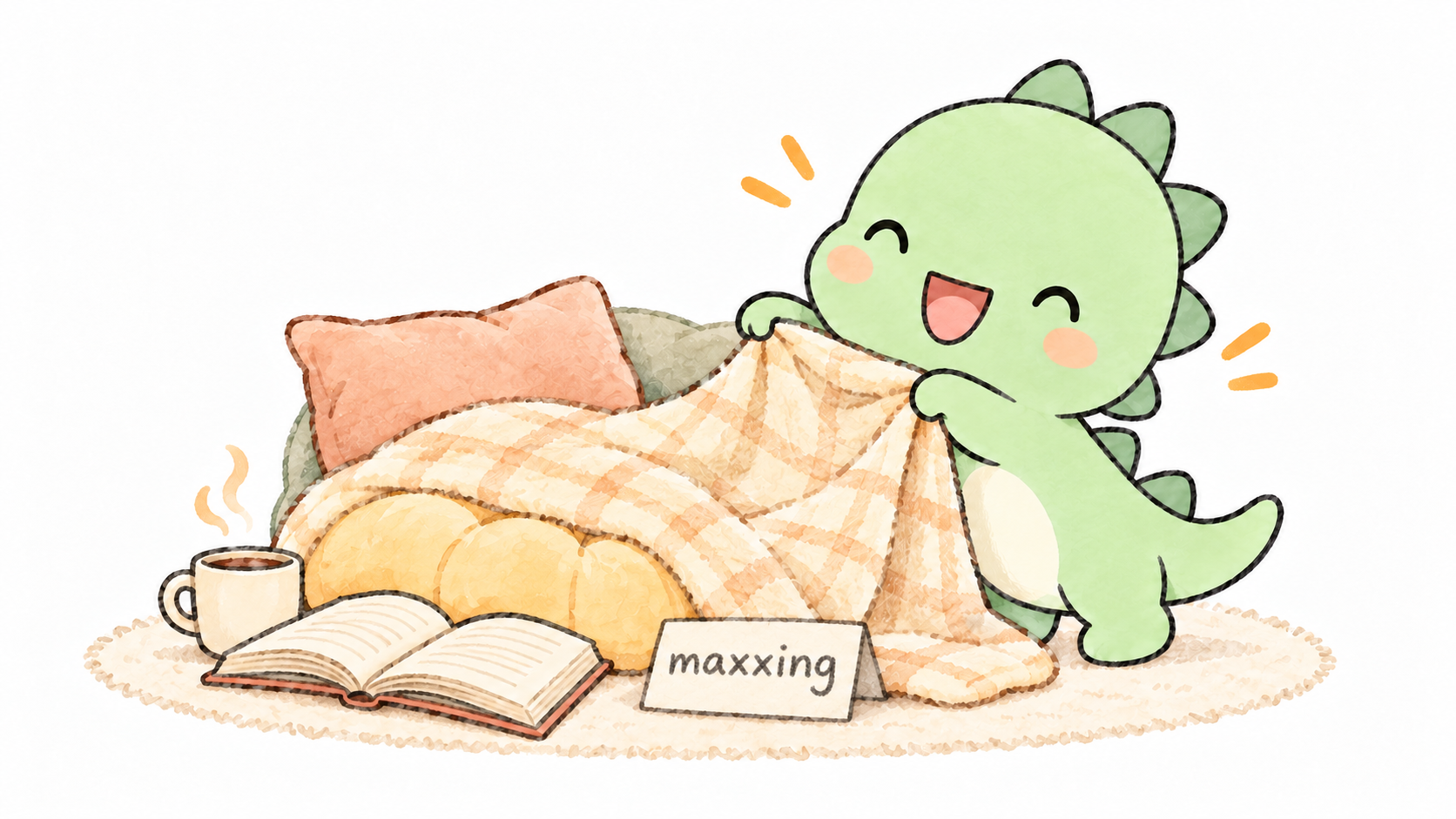
2026: What is maxxing?
Dictionary.com chose maxxing: pursuing an activity to the fullest or optimizing an aspect of life. It often joins another word: looksmaxxing means trying to improve your appearance, while cozymaxxing might mean making an evening at home as comfortable as possible.
I’m cozymaxxing this weekend.
The term can be earnest or playful, even poking fun at the pressure to optimize everything. Collins shortlisted looksmaxxing in 2024; in 2026, maxxing itself became Dictionary.com’s Word of the Year.
2025: AI, rage bait and 67
Dictionary.com: 67
67 is pronounced six-seven, not sixty-seven. Popular among young people online and at school, it has no fixed meaning: some use it for “so-so,” while others say it as a playful, nonsensical expression. It is thought to be linked to Skrilla’s song “Doot Doot (6 7)” and spread through short videos. What exactly does it mean? Sometimes the uncertainty is the answer. [Dictionary.com]
Collins: vibe coding
Vibe coding means using natural-language prompts to get AI to help write computer code. You might ask it to make a page for tracking study time, then refine the result through conversation.
She used vibe coding to build a simple app.
The term reflects how AI is changing software development. [Collins]
Merriam-Webster: slop
Slop can mean a wet mess or something of poor quality. Online, it has acquired a newer sense: low-quality digital content, often produced in quantity using AI.
My feed is full of AI slop.
It is a negative judgment: not all AI-generated content is slop. [Merriam-Webster announcement]
Oxford: rage bait
Combine rage with bait and you get rage bait: content deliberately designed to make people angry and provoke engagement.
That post looks like rage bait. Don’t let it ruin your day.
When a post makes you want to reply immediately, pause: is it trying to have a serious discussion, or to capture your attention through anger? [Oxford]

2024: From social-media trends to polarization
Dictionary.com: demure
Traditionally, demure describes someone reserved, modest or decorous. In 2024, creator Jools Lebron’s “very demure, very mindful” videos made it a sensation; online, it could be used humorously for a polished or thoughtful manner.
Her outfit is simple and demure.
It can be a sincere compliment or a reference to the trend. [Dictionary.com]
Collins: brat
A brat can be a spoiled or annoying child. But the 2024 trend associated with Charli XCX’s album Brat also celebrated an attitude that is confident, pleasure-seeking and a little rebellious.
She’s embracing her brat era.
In ordinary conversation, calling someone a brat can still mean they are spoiled. [Collins]
Merriam-Webster: polarization
Polarization is the division of opinions into sharply opposing extremes. It often comes up in discussions of politics and society.
Political polarization makes it harder to find common ground.
The verb is polarize and the adjective is polarized, as in a polarized society. [Associated Press]
Oxford: brain rot
Brain rot literally sounds like a decaying brain, but it is commonly used for the perceived effects of consuming too much low-quality online content—or for the content itself.
I spent two hours scrolling through silly videos. That’s enough brain rot for today.
It is often self-deprecating, not a claim that short videos literally make your brain rot. [Oxford]
How should you use these words?
A Word of the Year is not necessarily the most common word, or one everyone uses. Polarization fits news and formal discussion; rage bait, brain rot and slop help explain online culture. 67, trend-specific brat and -maxxing combinations are more informal.
The next time you meet an unfamiliar expression, look beyond its definition: where did it become popular, and is the speaker being serious or joking?