
All articles · Published 2026-09-30
TOEIC Part 7 Abbreviations: What n/a, Inc., ext. and Re: Mean — and Why Ms. Isn't an Abbreviation at All
Shopping carts, invoices, email headers and signatures in TOEIC Reading are full of abbreviations like n/a, Inc., #, ext. and Re: — and the answer to a question is often sitting right behind one. This post starts with a shopping cart from the official sample test, then sorts the abbreviations Part 7 actually uses into six groups: before names, after company names, times, addresses and phones, numbers and units, and letters. Along the way: why nobody spells out Mrs., why No. has an o in it, why RSVP is French, and why Ms. isn't short for anything.
A shopping cart from the official sample test
The last question set in the official TOEIC Listening & Reading sample test that ETS publishes (questions 196–200) has three texts: an ad for a paint company, an online shopping cart, and a customer's complaint email. The cart looks like this:
| Item | Size | Quantity | Price |
|---|---|---|---|
| Caspian Blue SP 237 | n/a | 1 | $0.00 |
| Deep Sea Blue SP 298 | n/a | 1 | $0.00 |
| Stormy Blue SP 722 | n/a | 1 | $0.00 |
| Misty Gray SP 944 | Gallon | 2 | $50.00 |
Above it sits the heading Order Summary #3397, and the company is Sparky Paints, Inc.
One small table, four kinds of abbreviation: n/a, #, SP and Inc. And none of them is decoration:
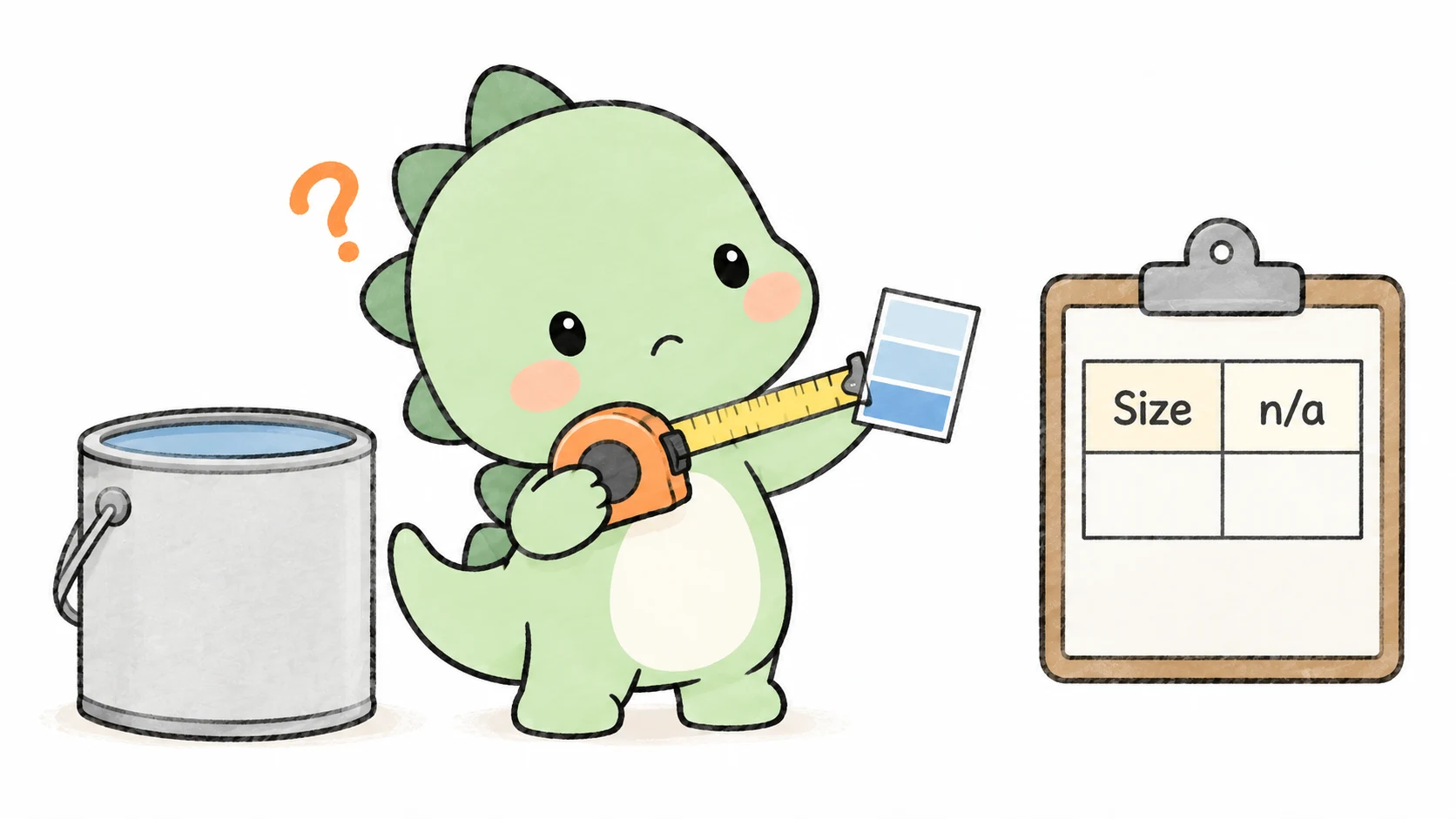
- n/a means not applicable. The first three items are free color samples, and a sample card has no size in gallons, so the Size column says n/a. Read it as its other common meaning, not available, and you'll think the three samples never shipped — yet in his email the customer says the SP 722 sample "worked well in my house."
- # means number. Question 198 asks, word for word: "What is most likely true about order #3397?"
- SP 722 is a product code. Question 199 asks which color the customer likes. The email only says SP 722; you have to go back to the cart, match SP 722 to Stormy Blue, and that's answer (C).
That is how abbreviations work in Part 7: they are rarely tested themselves, but the information behind them — a time, a person, a company, a number, a way to get in touch — is very often the answer.
How many abbreviations does Part 7 really use?
Far fewer than the "100 business abbreviations you must know" lists suggest.
We went through every Part 7 text in the official sample test. These are all the abbreviations in it: Mr., Ms., Inc., A.M./P.M., #, n/a, SP (a product code), TX (Texas), in (inches) and OK. The email's address says Maymill Road, not Rd.; the ad says within three business days, not 3 bus. days.
We also counted our own bank of 1,618 Part 7 texts:
| Abbreviation | Occurrences |
|---|---|
| a.m. / p.m. (either case) | 965 |
| Mr. / Ms. / Mrs. / Dr. | 328 |
| Re: / RE: (email subject lines) | 170 |
| Co. / Ltd. / Inc. / Corp. | 51 |
| HR (human resources) | 42 |
| # (numbers) | 34 |
| Q1–Q4 (quarters) | 26 |
| ext. (phone extensions) | 9 |
| e.g. / i.e. / etc. / ASAP / FYI | 0 |
The last row is the point. The Latin abbreviations English classes love, and the chat-style ones, barely show up in TOEIC-style writing. TOEIC texts are written out in full: they would rather say as soon as possible than ASAP.
So instead of memorizing a hundred, it pays to sort the ones you'll actually meet into six groups, and to know where in a text each group lives and what it's hiding.
Group 1: before names — Mr., Ms., Mrs., Dr.
The most common group in Part 7, and the one with the most stories.
- Mr. (/ˈmɪstɚ/): the full word is mister, which the Online Etymology Dictionary describes as an unstressed variant of master, appearing in the mid-15th century as a title of courtesy — but without the meaning of "master."
- Mrs. (/ˈmɪsɪz/): for a married woman. The full word is mistress, which once meant "woman in charge of a household" or "female teacher," and today mostly suggests a married man's lover. So nobody expands Mrs. Smith into Mistress Smith. This is an abbreviation its own full form abandoned.
- Ms. (/mɪz/): for a woman, without saying whether she is married.
- Dr.: Doctor. But in an address, Dr. is Drive — Dr. Amelia Grant is a person, Maple Dr. is a street.
Ms. isn't an abbreviation
Nothing has been left out of Ms. It was made by blending Miss and Mrs.
The earliest known proposal appeared on November 10, 1901, in The Springfield Republican, a Massachusetts newspaper. An unsigned writer argued that Ms. was simple and easy to write, and that "the person concerned can translate it properly according to circumstances." The idea went nowhere at the time. The word only caught on after feminists began promoting it in the 1960s; Gloria Steinem and others endorsed it in 1970, she launched Ms. magazine in 1971, and The New York Times held out until 1986 before adopting it.
The Oxford English Dictionary's verdict: Ms. is not technically an abbreviation, yet American style guides and dictionaries still give it a period. A word with nothing omitted, wearing a dot that means "something was omitted here."
The question tells you who's a Ms.
This one is useful in the exam. The used-car ad in sample questions 147–148 says only "Call Firoozeh Ghorbani." Most test takers couldn't tell you whether that's a man or a woman. But question 148 reads: "why is Ms. Ghorbani selling her car?"
Same thing in questions 176–180: the email is signed Jody Annesly, and Jody is a name for men and women alike. Question 178 asks, "Who most likely is Ms. Annesly?" — the question itself tells you.
In a Part 7 set with several people writing to each other, that small Ms. or Mr. is often the fastest way to work out who a question is about.
Mr. and Mr: the period is American
You may have seen "Dear Mr Halloran" in our question bank, with no period. That isn't a typo; it's British style.
The Oxford style manual New Hart's Rules draws the line like this: when the abbreviation ends with the last letter of the full word (Mister → Mr, Doctor → Dr, Saint → St), it's a contraction, and British style leaves off the point; when it just cuts the word short (Professor → Prof., Company → Co.), the point stays. American style mostly puts a period on all of them. It's the same story as theatre and theater: both are right, from opposite sides of the Atlantic.
Group 2: after company names — Inc., Co., Ltd., Corp.
| Abbreviation | Full form | Most common in |
|---|---|---|
| Inc. | Incorporated | United States, Canada |
| Corp. | Corporation | United States |
| Co. | Company | everywhere |
| Ltd. | Limited (limited liability) | UK, Commonwealth |
| LLC | Limited Liability Company | United States |
A company ending in Ltd. usually means the text is set in the UK, Australia or another Commonwealth country; Inc. usually means North America. That won't be tested directly, but it tells you where you are.
Note how the sample test writes it: "Sparky Paints, Inc., makes it easy..." — commas before and after Inc. That's the traditional formal style, not a stray comma. Many style guides no longer require those commas, so you'll see it both ways.
Group 3: times — a.m./p.m., Q1, FY
- a.m.: ante meridiem, Latin for "before noon."
- p.m.: post meridiem, "after noon."
Capital or lower case are both fine. The sample test's email says "between the hours of 10:00 A.M. and 5:00 P.M.", while the text-message chain in the same test uses the 24-hour clock: "arriving in Kansai at 18:00." You need to read both.
There is one real trap: is 12 p.m. noon or midnight?
Taken literally, noon is neither before noon nor after it, so neither a.m. nor p.m. is right. The U.S. National Institute of Standards and Technology (NIST) is blunt: 12 a.m. and 12 p.m. are ambiguous and should not be used. Everyday English uses them anyway, and by convention 12 p.m. is noon and 12 a.m. is midnight. Our own bank has time slots like "10:00 a.m.–12:00 p.m." — ten in the morning until noon.
Two more time abbreviations are common in business documents:
- Q1–Q4: quarters, first to fourth. A Q3 catalog is the third-quarter catalog.
- FY: fiscal year. FY2026 doesn't necessarily start in January — many companies begin their fiscal year in April or July.
Group 4: addresses and phones — TX, Ste., ext.
The signature on the sample test's email:
Jody Annesly
Annesly Data
512-555-6879 (mobile)
342 Maymill Road, Fort Worth, TX 70609
TX is Texas, and 70609 is the ZIP Code. U.S. state abbreviations are all two capital letters because of the post office's machines. According to the U.S. Postal Service's own history, five-digit ZIP Codes arrived on July 1, 1963, but most addressing equipment could fit only 23 characters, spaces included, on the last line of an address. The Post Office issued a first list of abbreviations in June, but many of them still had three or four letters — still too long. In October it settled on today's two letters. Texas went from Tex. to TEX to TX.
Other common address abbreviations:
| Abbreviation | Full form | Meaning |
|---|---|---|
| St. | Street | street |
| Ave. | Avenue | avenue |
| Blvd. | Boulevard | wide, often tree-lined avenue |
| Rd. | Road | road |
| Dr. | Drive | street |
| Ste. | Suite | a unit in an office building |
| Fl. | Floor | floor |
Suite turns up a lot in Part 7: a notice about a company moving will say "Parkview Tower, Suite 900" — and a suite here isn't a hotel room, it's a set of offices in a building.
After a phone number, ext. is extension: contact the IT Help Desk at ext. 4400. (mobile) means a cell phone.
Group 5: numbers and units — No., #, lb, in
No. means number, but there is no o in "number" at all. That's because it isn't English: according to the Online Etymology Dictionary, No. comes from Latin numero (the ablative of numerus, "number") and entered English in the 1660s.
British style usually drops the point from contractions, but No. is the exception — New Hart's Rules keeps its point for a very practical reason: without it, it's just the English word no.
# is also read as number in the U.S.: Order #3397 is "order number three-three-nine-seven." British documents more often write No.
Units have Latin fossils too:
- lb: pound, from Latin libra.
- oz: ounce, from Italian onza.
The library notice in the sample test asks for posters that measure "8.5 in x 11 in or 5.5 in x 8.5 in" — that in is inch, not the preposition. 8.5 × 11 inches is the standard U.S. letter size, roughly A4. Read it too fast and the sentence seems to contain several grammar mistakes.
Our bank also has a 3,200 sq ft (square feet) office for lease, and plenty of kg.
Group 6: letters and invitations — Re:, cc, P.S., RSVP
Re: isn't "reply"
Almost everyone assumes the Re: in an email subject line is short for reply. It's actually Latin: according to the Online Etymology Dictionary, re comes from Latin in re, "in the matter of," and has been used in English legal documents since around 1700. Re: Invoice No. 3172 means "regarding invoice no. 3172."
Email programs put it in front of replies, so today it really does stand for a reply — but it predates email by close to three hundred years. In our bank, 170 texts use Re: (or the all-caps RE:).
cc: a sheet of paper that has vanished
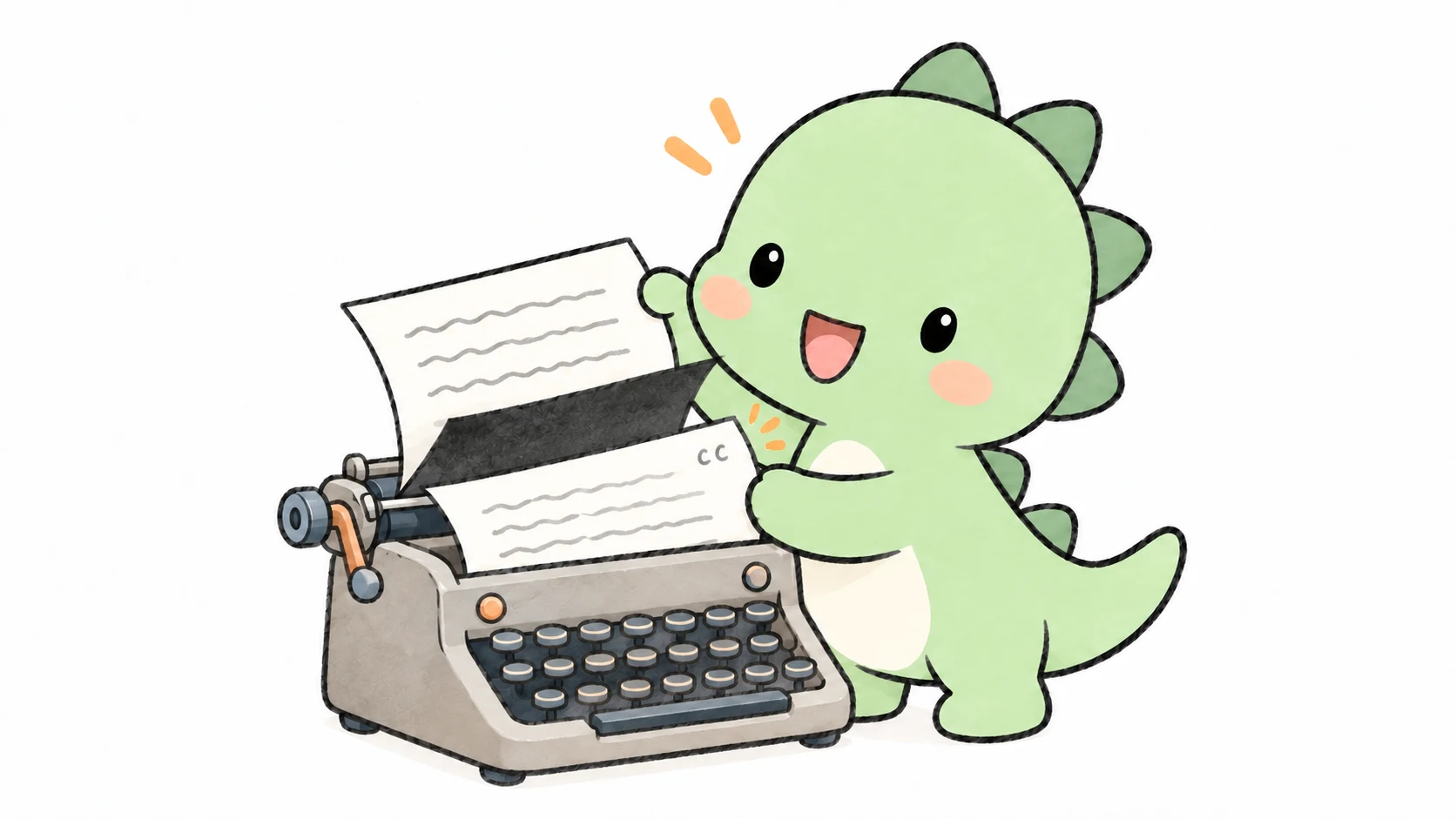
cc is carbon copy. A typist would slip a sheet of carbon paper between two sheets of paper, and the lower sheet would come out with a copy. Etymonline dates cc as a business-correspondence abbreviation to 1936.
Almost nobody uses carbon paper anymore, but email's cc and bcc (blind carbon copy) are used every day.
P.S. and RSVP
- P.S.: post scriptum, Latin for "written after." In English since the 1610s.
- RSVP: répondez s'il vous plaît, French for "please reply."
RSVP is French, but it took off in England. In an 1816 book, the French writer Nougaret explained to his French readers that in London, people of the first rank added the letters R. S. V. P. to the bottom of their invitation cards — and that many recipients had no idea what they meant. The earliest English example found so far is in Domestic Duties, a household-management book published in London in 1825, at the bottom of an invitation to a quadrille party.
Today RSVP is an English verb: Please RSVP by November 28. Think about it, and "please RSVP" means "please, please reply" — s'il vous plaît already is "please." Native speakers don't mind.
e.g. and i.e.
They hardly ever appear in TOEIC texts, but you'll need them the moment you write an email in English, so here's the difference:
- e.g.: exempli gratia, "for example" — what follows is a few examples.
- i.e.: id est, "that is" — what follows restates the whole thing in other words.
Memory trick: e.g. = example given; i.e. = in essence. (That's a mnemonic, not the etymology.)
And these: the ones you spell out letter by letter
| Abbreviation | Full form | Meaning |
|---|---|---|
| HR | Human Resources | personnel department |
| IT | Information Technology | tech support department |
| ID | Identification | identity document |
| FAQ | Frequently Asked Questions | common questions page |
| R&D | Research and Development | research and development |
| CEO / CFO | Chief Executive / Financial Officer | company head / head of finance |
| VP | Vice President | vice president |
| PO | Purchase Order | purchase order |
Part 7 uses these without explanation. "Contact HR" means the personnel department; PO #2026-0519 is a purchase order.
How to read: where the abbreviations are, the answers often are too
Back to the question set we started with. Question 198's answer rests on the shipping line of the cart; question 199 needs SP 722 from the email matched back to the cart. The places where abbreviations cluster — tables, headings, email headers, signatures — are exactly where the answers to detail questions tend to be.
When you read Part 7:
- Scan the structure before the body. From / To / Re: / Date, the signature, the table headings: in ten seconds they tell you who is writing to whom, about what, and from where.
- When you see a number, note where it is. #3397, Invoice No. 3172, PO numbers, product codes — in multi-text sets, these are often what ties one text to another.
- Use the Mr. / Ms. in the question to identify people. When a name in the text doesn't tell you, the question will.
- In time questions, look twice at a.m. / p.m. 10:00 a.m. and 10:00 p.m. differ by one letter.
As usual, abbreviations come with exceptions
- There is only one official sample test. When we say the sample has no e.g. or ASAP, we mean its nine Part 7 texts. ETS publishes no vocabulary rules, and other abbreviations may well appear on a real test.
- The bank counts are from our own bank. 965 a.m./p.m., 170 Re:/RE: lines — those numbers come from our questions and only show that these abbreviations are common in TOEIC-style writing.
- Style guides disagree. Whether to use periods, whether to abbreviate state names — publishers' rules differ. The Associated Press stylebook, for example, spells state names out in the body of a news story. This post describes the most common forms, not the only correct ones.
- n/a has two meanings. Not applicable and not available are both common; context decides. In a table column, n/a usually means not applicable.
- 12 p.m. is convention, not logic. Most people read it as noon, but documents that care about precision simply write noon, or 12:00 noon.
In Handy 990's Part 7 practice, long-press any word in a passage to look it up. In multi-text sets, the #s, No.s and product codes are the threads that tie the texts together — worth a second look. Elsewhere in this series: "British vs American spelling" covers theatre and theater, the same Atlantic that separates Mr and Mr.; "British vs American vocabulary" sorts out lift, flat and the rest; and "Everyday words that change meaning at the office" covers sheets, bars and other familiar words with new jobs.