
All articles · Published 2026-09-27
How many meanings does "He saw her in the park with a telescope" have?
Take a guess first: in He saw her in the park with a telescope, who has the telescope, and who is in the park? You probably see one answer; the internet's standard answer is "six meanings". This post checks those six: linguists can draw only five grammatical trees for the sentence, yet the sixth reading isn't wrong — and once you also ask who is in the park and which kind of "with" this is, you get more than ten different pictures. Along the way: why every extra prepositional phrase adds a pile of possible structures, why human experts get only 93.2% right, and how to keep just one meaning when you write.
Before you read on: what does this sentence mean to you?
Plenty of learners carry around an assumption: English is a more precise language than their own. Other languages, the thinking goes, let one sentence mean several things, while English has strict grammar — tenses, plurals, articles — so its meaning should be crystal clear.
It isn't. This post needs just one nine-word English sentence to knock that assumption over.
He saw her in the park with a telescope.
Nine words, perfectly grammatical. Before you read any further, put it into your own language, then answer two questions:
- Who has the telescope?
- Who is in the park?
Got your answers?
Yours is probably "he was in the park and saw her through a telescope" — it's his telescope, and he's in the park. That is the smoothest reading, and it's the one we saw first too.
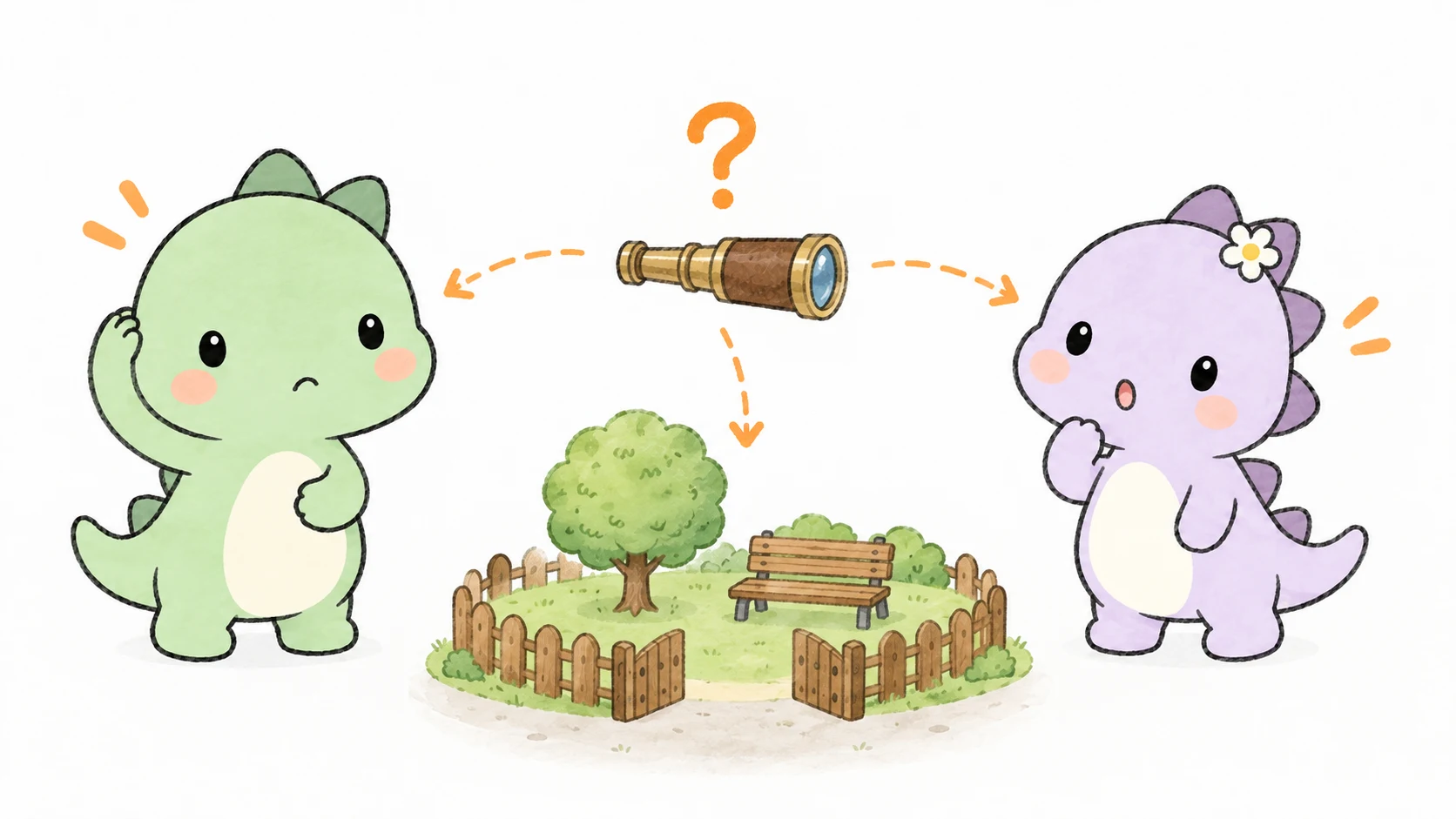
But read it again. She could be the one holding the telescope. The telescope might not be in anyone's hands at all — it could be one of those coin-operated ones the park has. He might not even be in the park; he could be looking from his own balcony. The sentence supports every one of these.
This telescope is going to change hands several times in this post. Let's take them one at a time.
The internet's standard answer: six meanings
This sentence has been doing the rounds on English Q&A sites for years, and the most common answer counts like this: the sentence has two prepositional phrases (in the park, with a telescope), and each can modify either "he" or "her"; on top of that, with a telescope can modify the park just before it (a park that has a telescope). Combine the options and you get six:
| # | The internet's version | In plain words |
|---|---|---|
| 1 | The park and the telescope both go with "him" | He is in the park, using a telescope to see her |
| 2 | The park and the telescope both go with "her" | She is in the park, with a telescope beside her |
| 3 | The park goes with him, the telescope with her | He is in the park and sees her holding a telescope |
| 4 | The telescope goes with him, the park with her | He uses a telescope to see her in the park |
| 5 | He is in "the park with a telescope" | In a park that has a telescope, he sees her |
| 6 | She is in "the park with a telescope" | He sees her, and she is in a park that has a telescope |
Looks thorough. But show this table to a linguist and they will frown first, then pull out a sheet of paper and start drawing trees.
Prepositional phrases need somewhere to "hang"
First, one idea. A prepositional phrase like in the park or with a telescope can't stand on its own. It has to hang on something in the sentence and add information about it. Linguists call this PP attachment, and it is one of the biggest sources of ambiguity in English.
In this sentence there are three places to hang a phrase:
- The verb saw: adds information about the seeing — where it happened, what it was done with.
- her: adds information about her — which her, what she has with her.
- the park: adds information about the park — what kind of park. (Only with a telescope can hang here; in the park is the park.)
Notice that he is not on the list. This is the first place where the internet's version is a little loose: in the standard analysis these phrases don't hang on the subject directly; they hang on the verb. Hanging on the verb means "this seeing happened in the park" and "this seeing was done with a telescope" — and whether she was in the park, as we'll see, it doesn't actually say.
The linguist's count: only five grammatical trees
Two phrases: in the park has two places to hang (saw, her), and with a telescope has three (saw, her, the park). That should give 2 × 3 = 6. But one of those combinations breaks the rules.
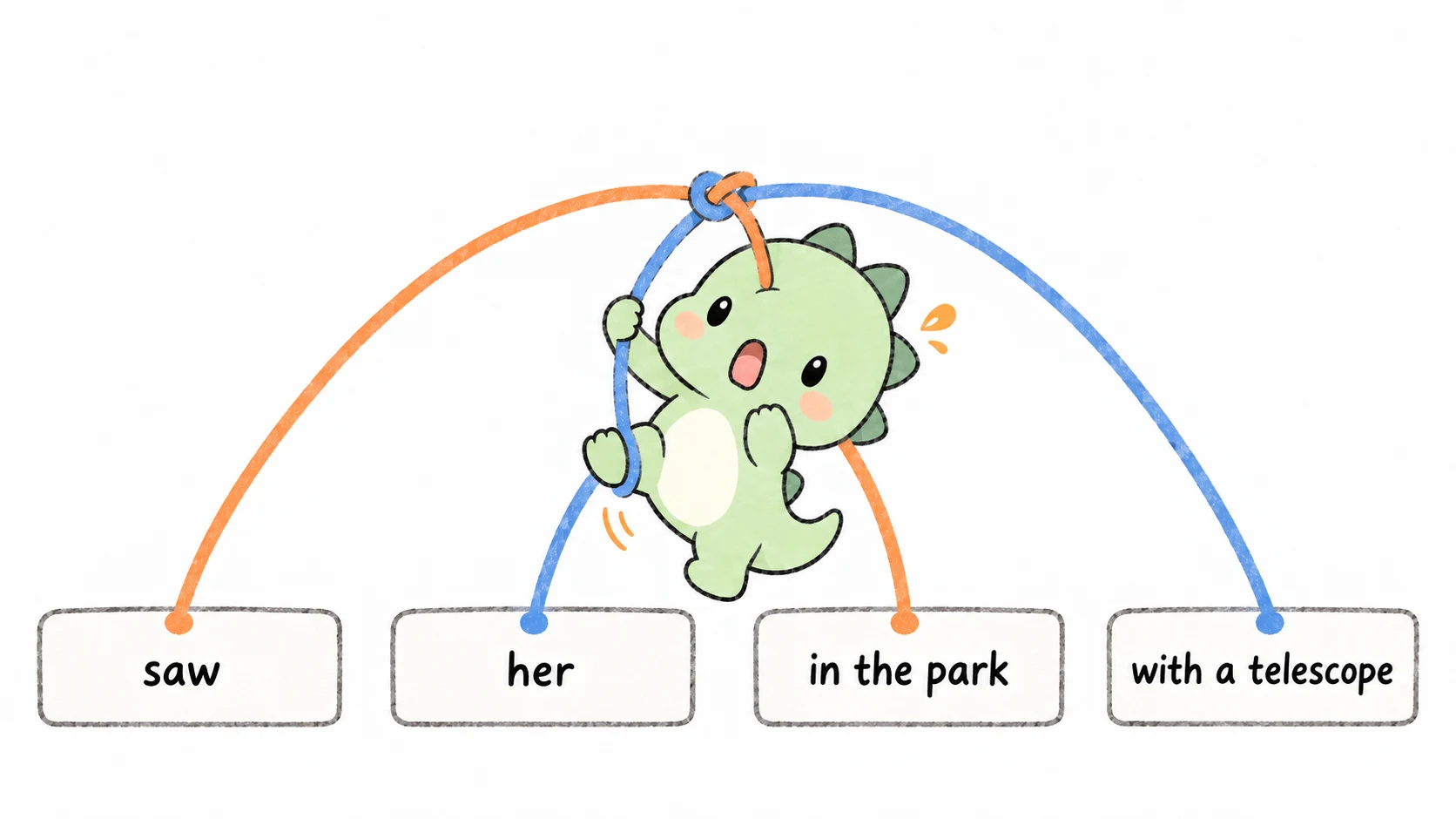
The rule is this: connect each phrase to the word it hangs on with a line, and the lines may not cross. English sentence structure nests, one layer inside another like Russian dolls; two dolls can't be jammed through each other.
The illegal combination is in the park on saw, with a telescope on her. Lay the four parts out in a row — saw, her, in the park, with a telescope — and the line from in the park has to jump over her to reach saw, while the line from with a telescope has to jump over in the park to reach her. The two lines are bound to cross in mid-air.
Each of the remaining five is a legal tree:
| Tree | in the park hangs on | with a telescope hangs on | In plain words |
|---|---|---|---|
| A | saw | saw | In the park, using a telescope, he saw her |
| B | saw | the park | In a park that has a telescope, he saw her |
| C | her | saw | Using a telescope, he saw "her, in the park" |
| D | her | her | He saw "her, in the park, holding a telescope" |
| E | her | the park | He saw "her, in the park that has a telescope" |
Drawn as five pictures, the five trees look something like this:
Tree A: he is in the park and sees her through his own telescope.
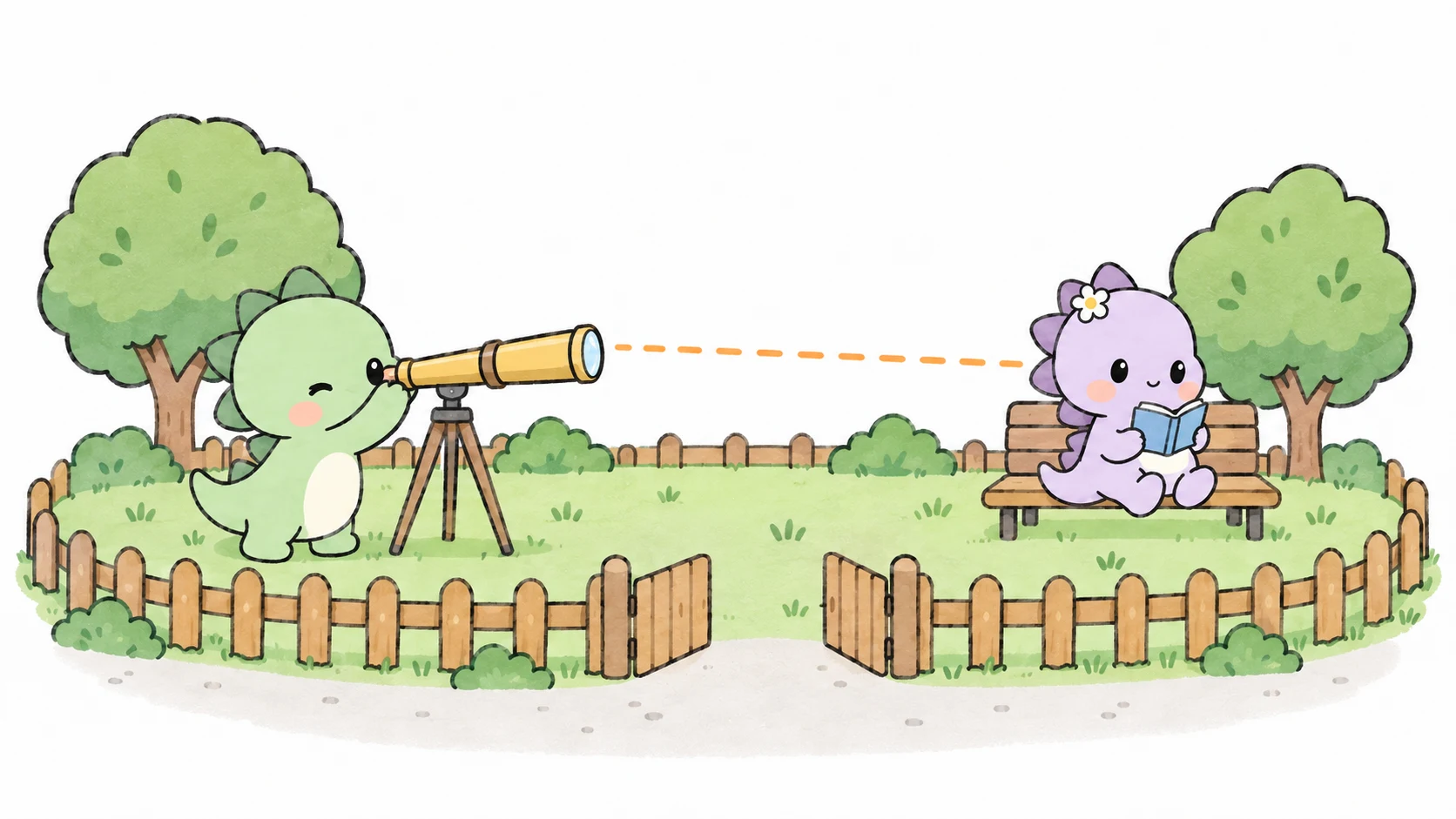
Tree B: the park already has a telescope; he doesn't use it and just sees her.
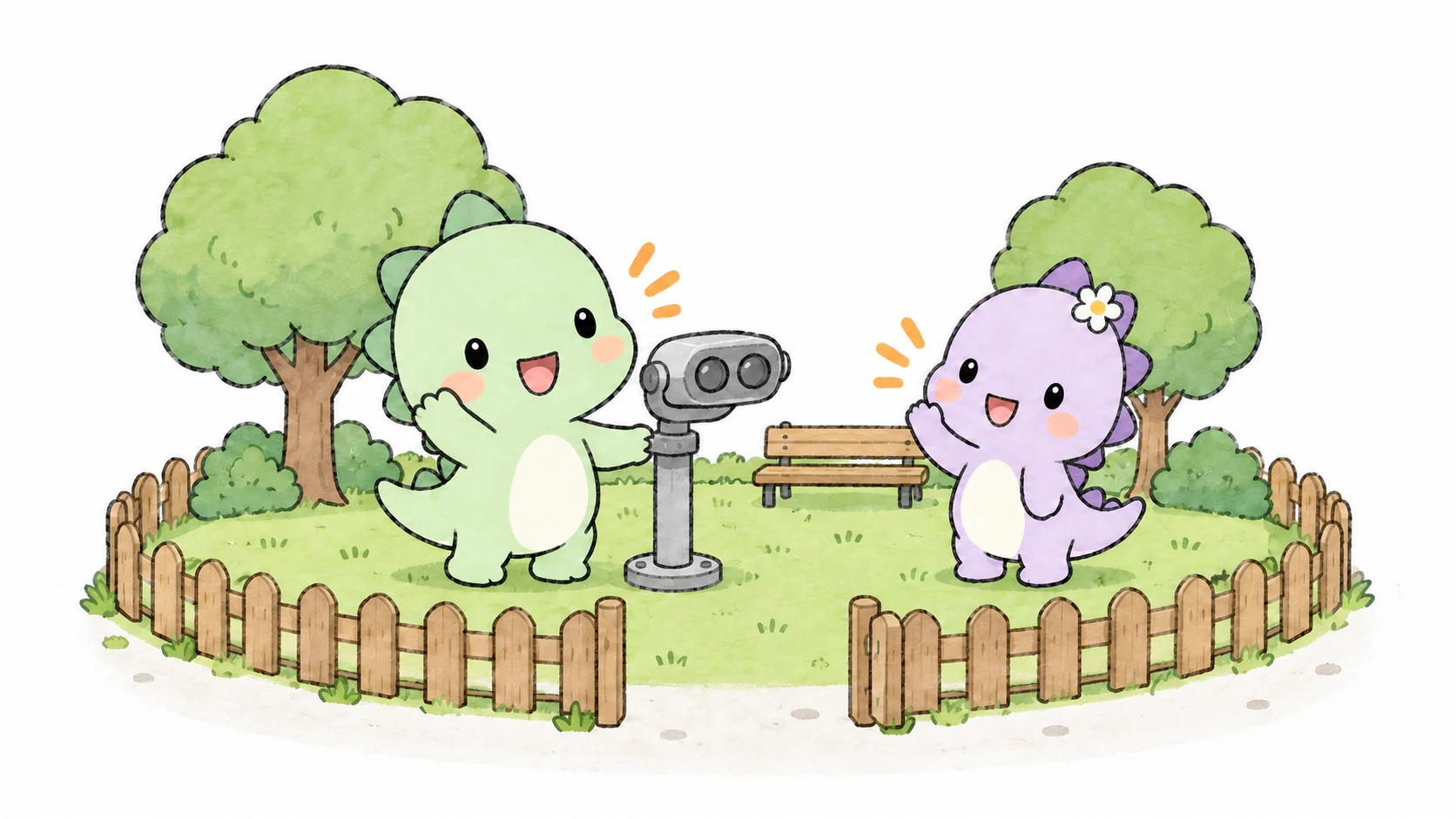
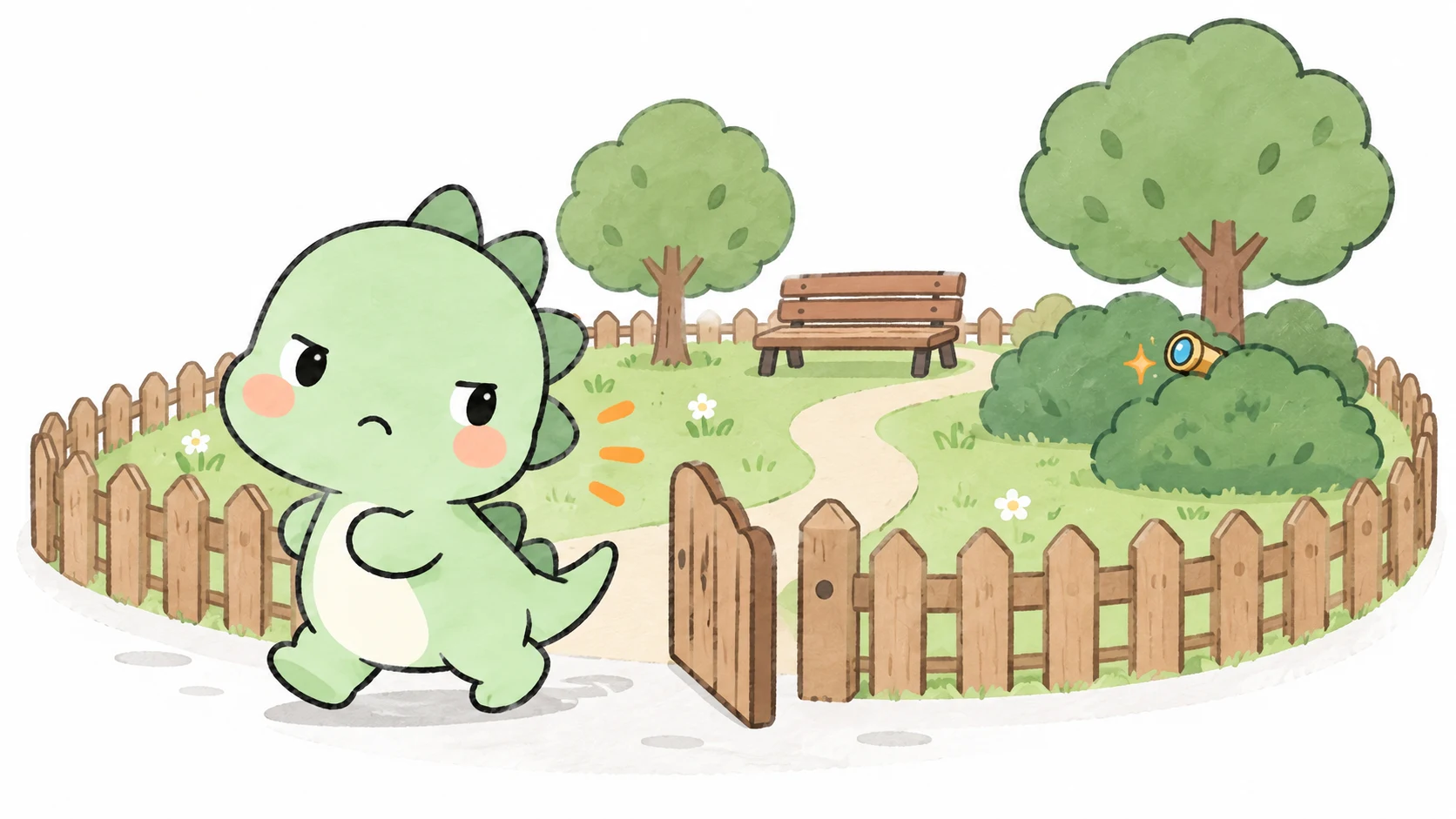
Tree C: he uses a telescope from outside the park and sees her inside it.
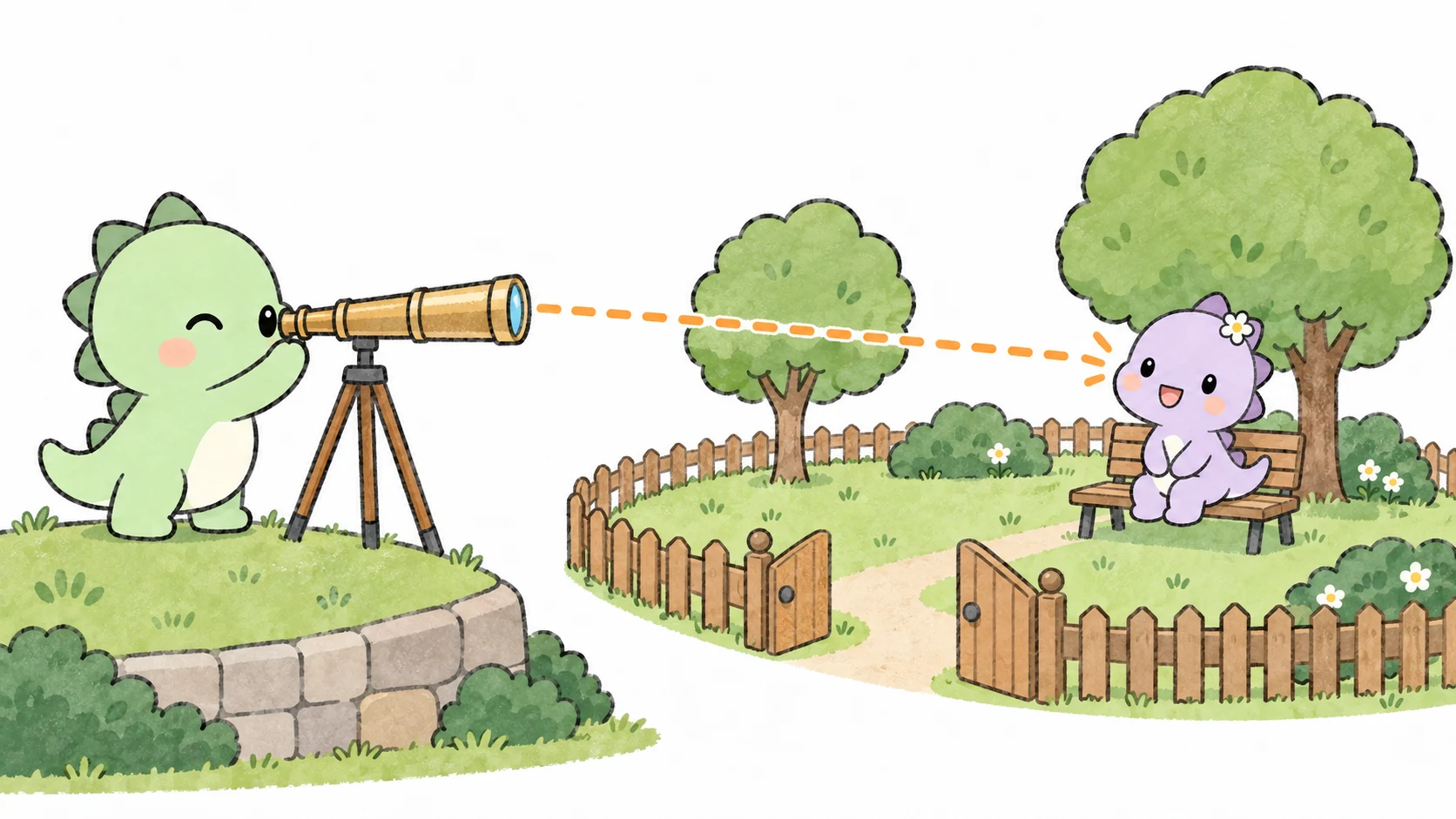
Tree D: she is in the park holding a telescope; he just happens to walk by and see her.
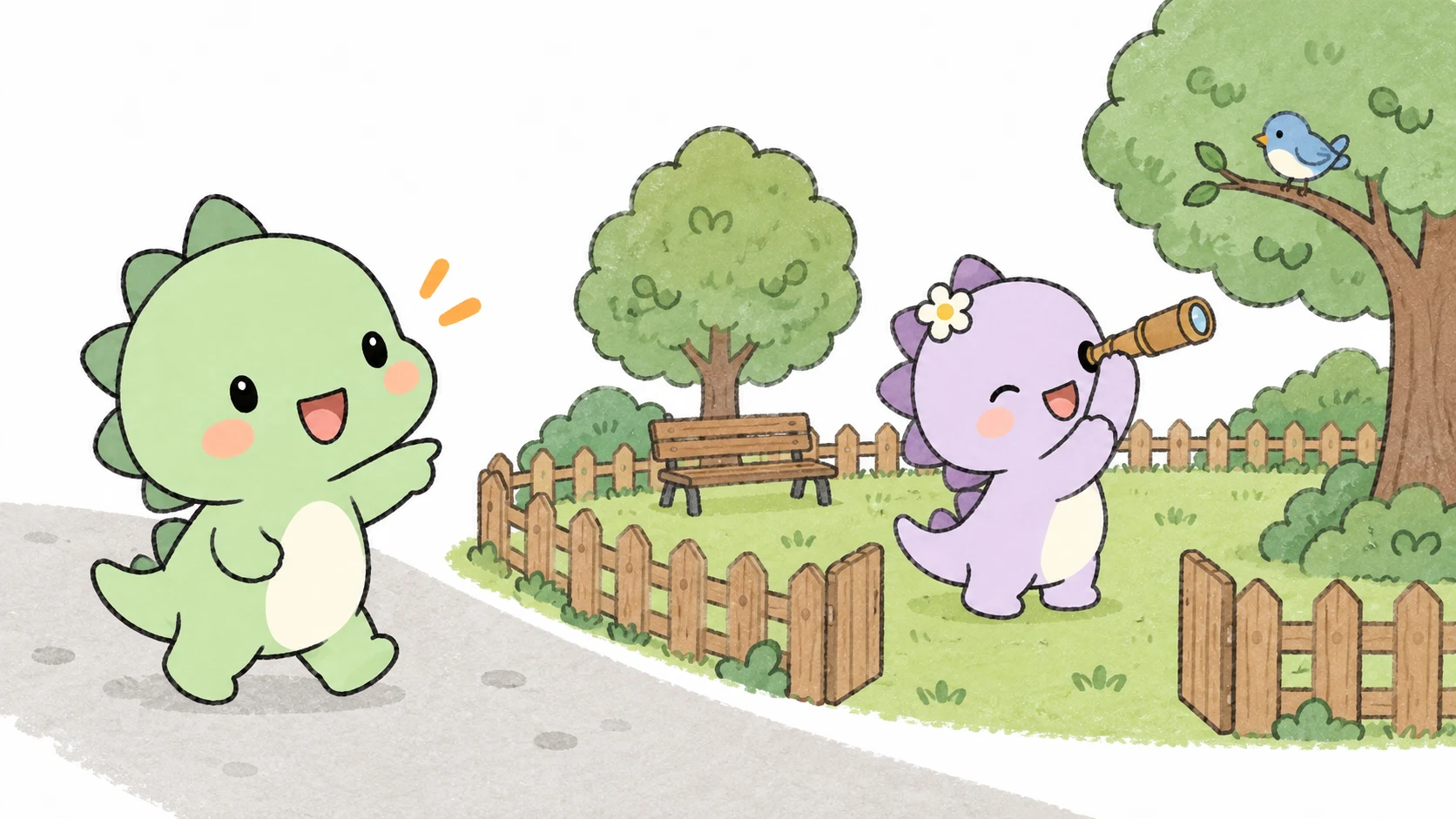
Tree E: she is standing next to the park's telescope, and he sees her from outside.
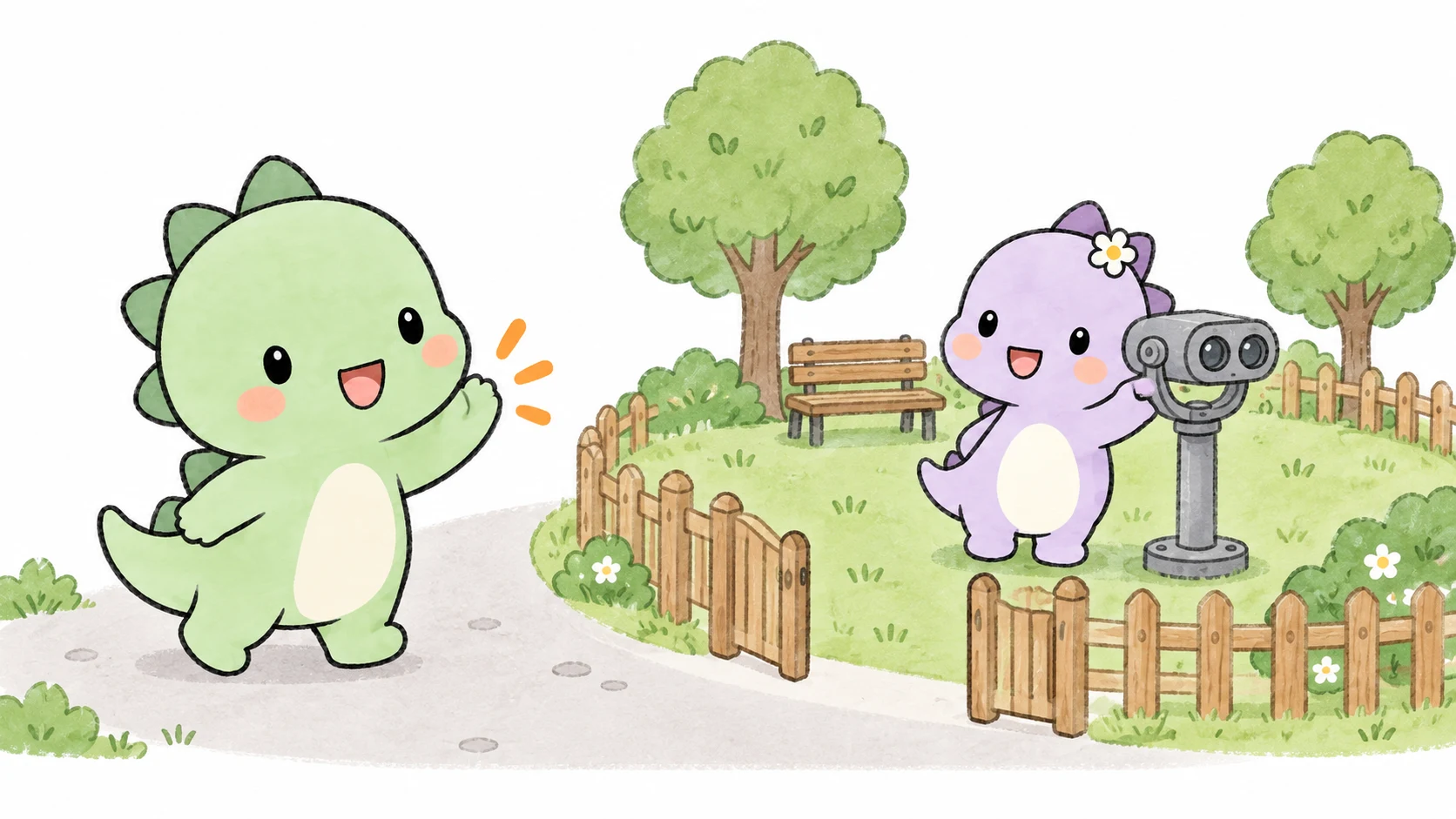
So the grammatical answer is 5.
We didn't just count these on our fingers. In 1982, Kenneth Church and Ramesh Patil published a paper in the American Journal of Computational Linguistics with a charming title: "Coping with Syntactic Ambiguity or How to Put the Block in the Box on the Table". One of their examples is a close sibling of our sentence: I saw the man on the hill with a telescope.
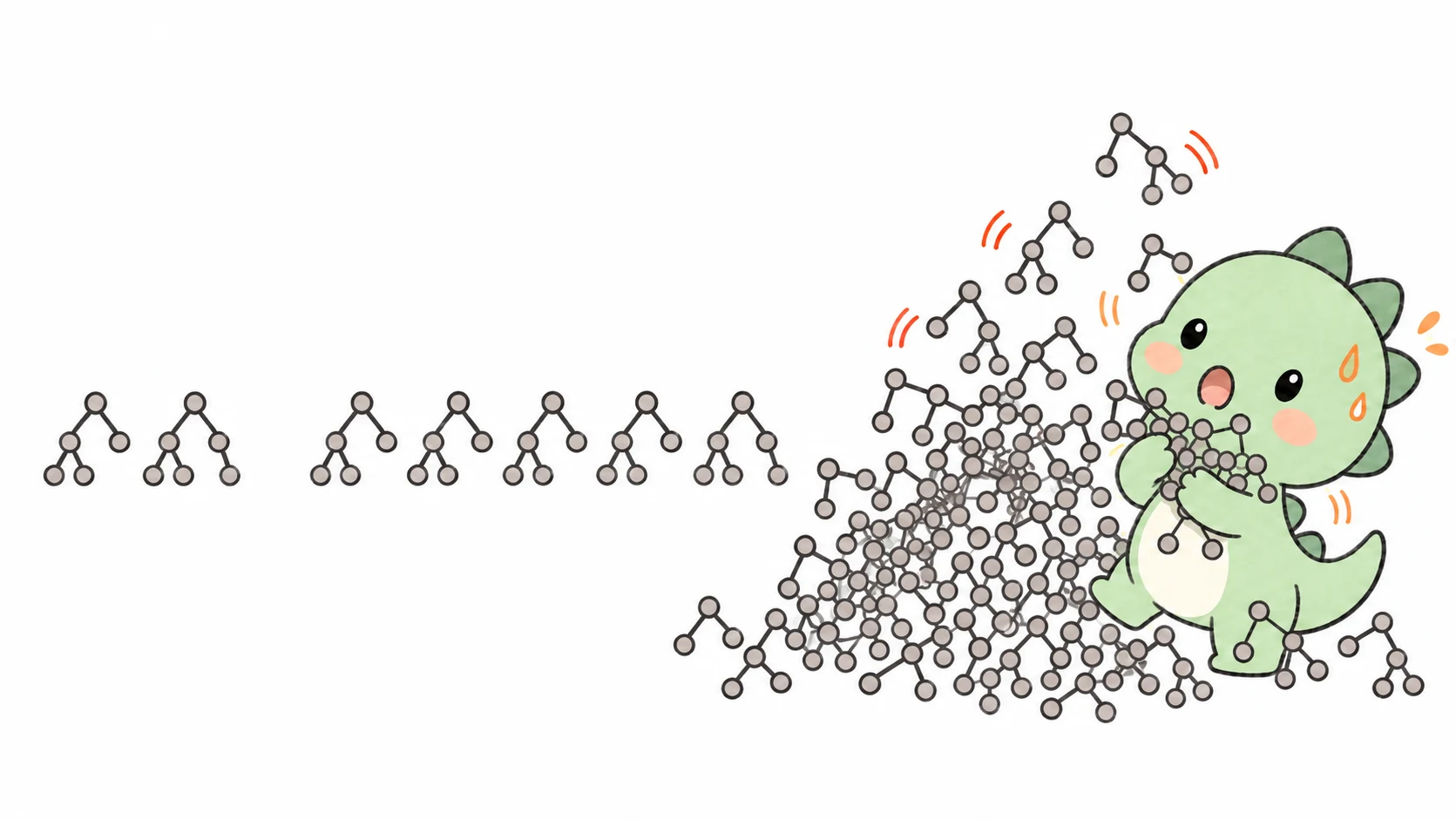
They pointed out that in sentences built as "verb + object + a string of prepositional phrases", every extra prepositional phrase makes the number of possible structures jump: one prepositional phrase gives 2 structures, two give 5, three give 14, and four give 42.
In other words, if we change the sentence to:
He saw her in the park with a telescope on Tuesday.
the number of structures the grammar allows jumps from 5 to 14. Add before lunch and it becomes 42. For computers in the 1980s this was a real problem: make a sentence a little longer and the possibilities to check exploded.
So where did the internet's third meaning go?
Line the internet's six up against the five trees:
- Internet 1 (he's in the park, he uses the telescope) → Tree A
- Internet 2 (she's in the park, she has the telescope) → Tree D
- Internet 4 (he uses the telescope, she's in the park) → Tree C
- Internet 5 (he's in a park that has a telescope) → Tree B
- Internet 6 (she's in a park that has a telescope) → Tree E
That leaves Internet 3: "he is in the park and sees her holding a telescope". It needs exactly the combination whose lines cross, so it has no tree of its own.
So is the internet's third reading wrong?
No. Look at this sentence:
I saw her in the park with her boyfriend.
Who is with the boyfriend? Her, obviously. But by the rule above, with her boyfriend can't jump over in the park to hang on her — so it must be hanging on the verb. It turns out that a with-phrase hanging on the verb can mean not only "what I saw with" but also "what state the other person was in when I saw them".
By the same logic, with a telescope in Tree A can also mean "when he saw her, she was holding a telescope". The internet's third reading really does exist; it just isn't a new tree. It is another reading living inside Tree A.
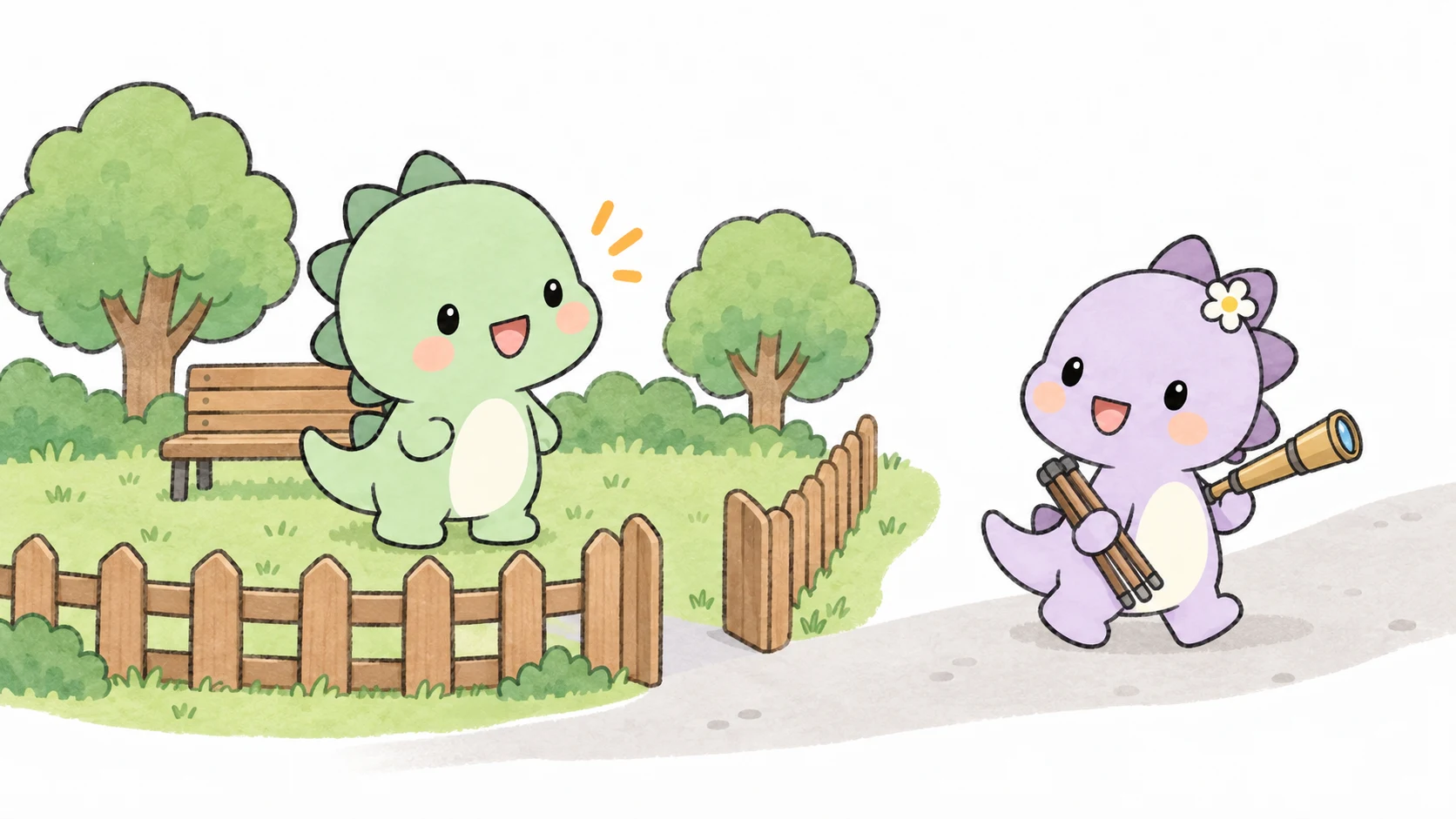
That brings us to the real point of this post: the number of trees is not the number of meanings.
Ambiguity beyond the trees: more meanings than trees
A grammatical tree decides which phrase hangs where, but it doesn't answer every question. There are at least two things a tree has no say over.
First, in the park hanging on the verb doesn't say whether she was in the park. It says the seeing happened in the park — the one doing the seeing is there; the one being seen? It doesn't say. Him in the park seeing her outside it, or both of them in the park — either can be called saw her in the park. (The reverse, her in the park and him outside, takes Tree C, D or E.)
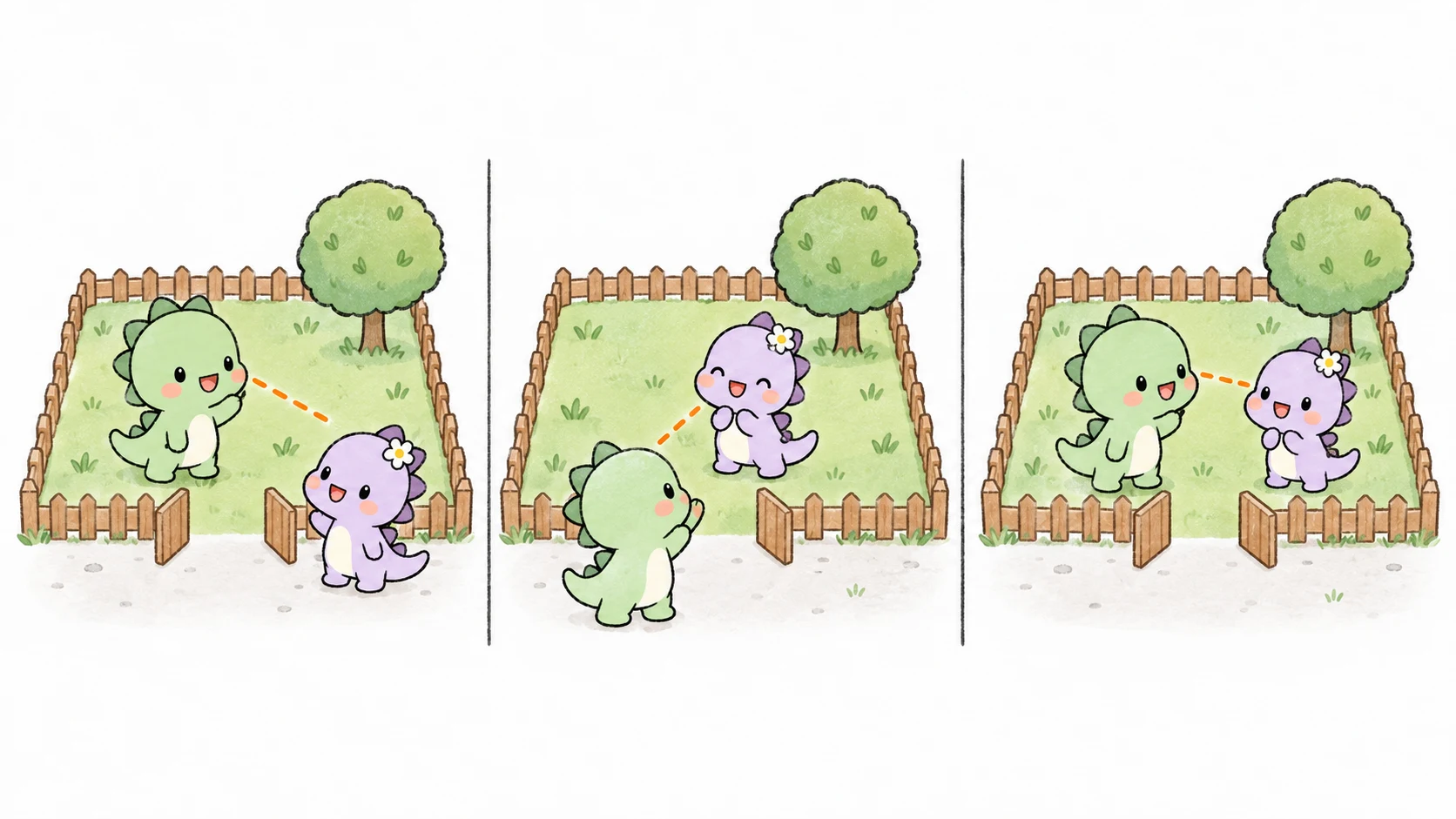
Second, there is more than one with. In this one sentence alone, with could be:
- An instrument: he looks through the telescope
- Carrying: he has a telescope with him but isn't using it
- The other person's state: she is holding the telescope (the with her boyfriend kind)
- The park's equipment: the park has a telescope (Trees B and E)

Put the two questions side by side:
| Question | Possible answers |
|---|---|
| Who is in the park? | Him / her / both |
| What's the deal with the telescope? | He uses it to see her / he's carrying it but not using it / she's holding it / it belongs to the park |
That's 3 × 4 = 12 pictures, and most of them make sense. Throw in another meaning of saw — see can also mean "meet with someone", as in I saw my lawyer yesterday — and the number climbs again.

As for the reading some people bring up — "saw as in the tool: he sawed her" — relax, grammar rules it out. When saw means cutting with a saw, a he subject needs saws, and the past tense is sawed; the saw in this sentence can only be the past tense of see. (For a sentence that puts saw to work in three different ways at once, see I saw a saw saw a saw in 10 English sentences that look like gibberish but are perfectly grammatical.)
With so many meanings, why does nobody get confused?
Because people don't guess with grammar. They guess with common sense.
A telescope is a thing for seeing, so the moment saw and telescope meet, your brain pairs them up. Try swapping the telescope for a dog:
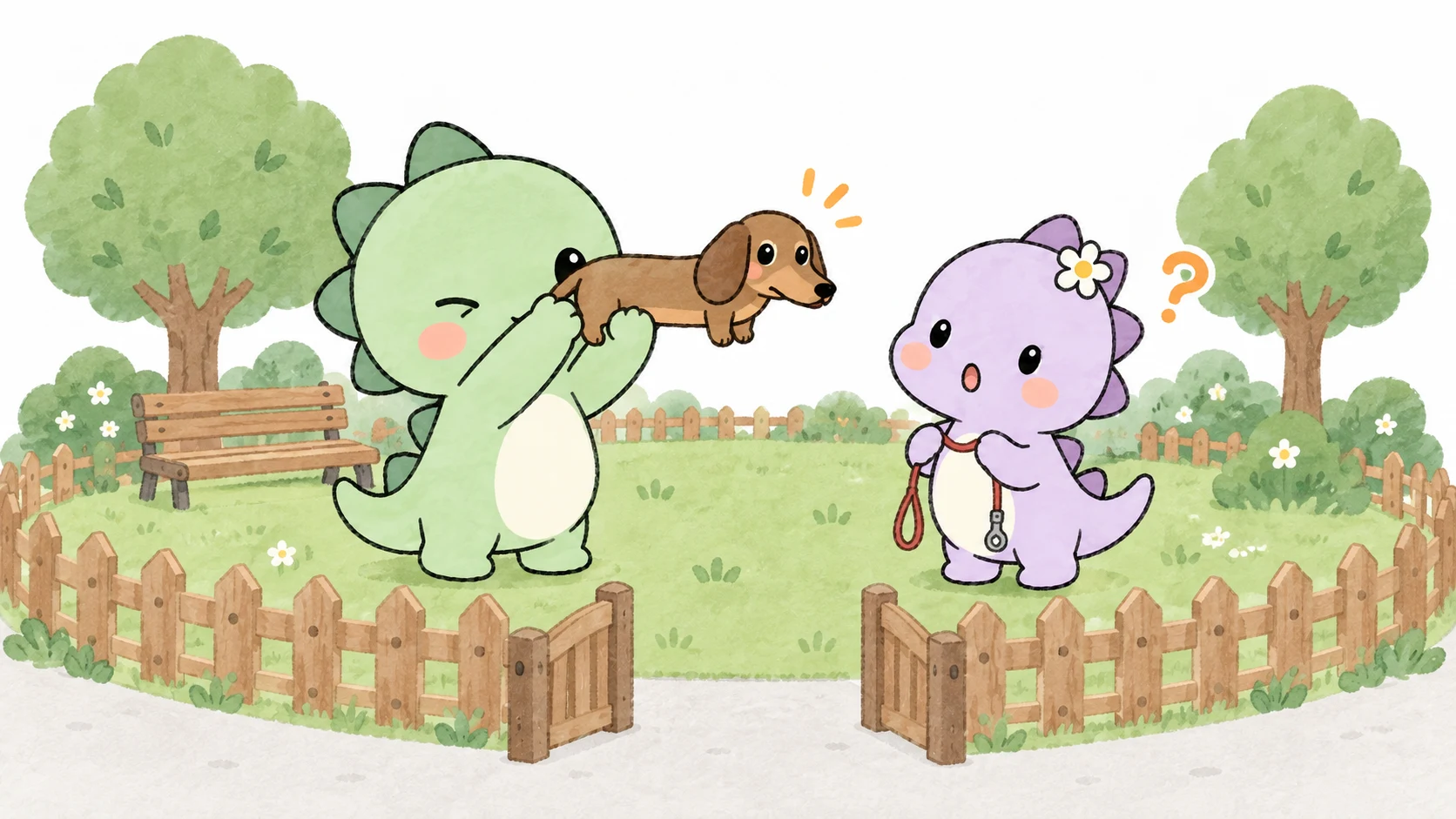
He saw her in the park with a dog.
You can't look through a dog, so the instrument reading vanishes instantly, and you will almost certainly read it as "she had a dog with her". The structure of the sentence is identical; only one noun changed.
Someone has measured this. In 1994, Adwait Ratnaparkhi, Jeff Reynar and Salim Roukos were studying how computers decide where a prepositional phrase should hang, and they tested humans along the way: they took 300 examples at random from Wall Street Journal text and asked 3 experts in syntactic annotation to decide. Given only four key words (for example the verb, the object, the preposition and the noun after the preposition), the experts averaged 88.2%; given the whole sentence, they still reached only 93.2%.
In other words, even with the full sentence in front of them, the experts disagreed with the reference answer on about 7 out of every 100 prepositional phrases. If you occasionally read an English sentence the wrong way, it really isn't all your fault.
In speech there is one more clue: pauses and lengthening. Snedeker and Trueswell (2003, Journal of Memory and Language) had participants say instructions like Tap the frog with the flower to another person — "use the flower to tap the frog", or "tap the frog that's holding a flower"? The speakers did use prosody to tell the two meanings apart, stretching or pausing on different words; but they only did so when the scene in front of them really made both meanings possible. When the scene had already settled it, nobody bothered.
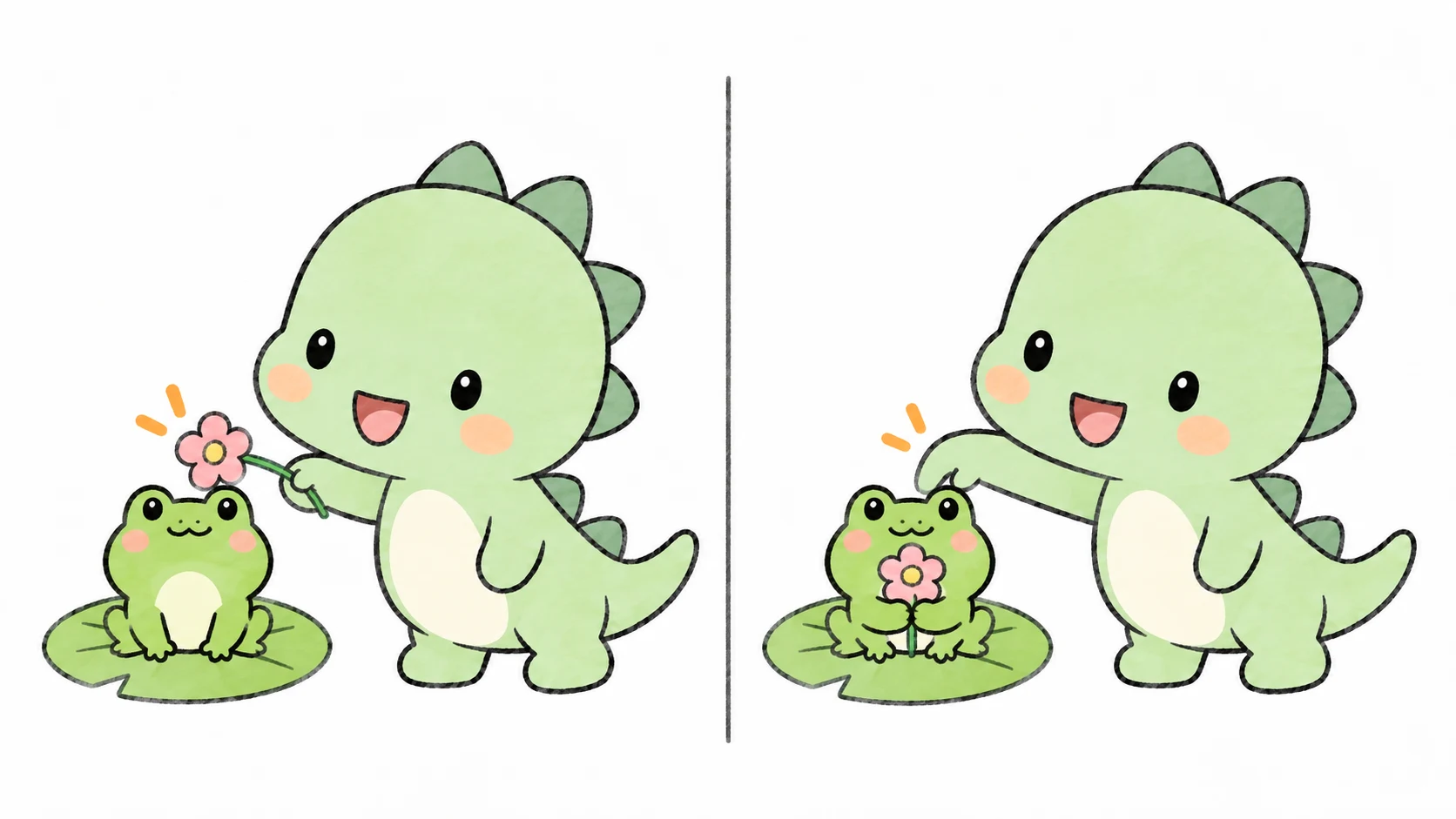
That is roughly how people handle ambiguity: not by running through every possibility every time, but by stepping in only when they notice trouble.
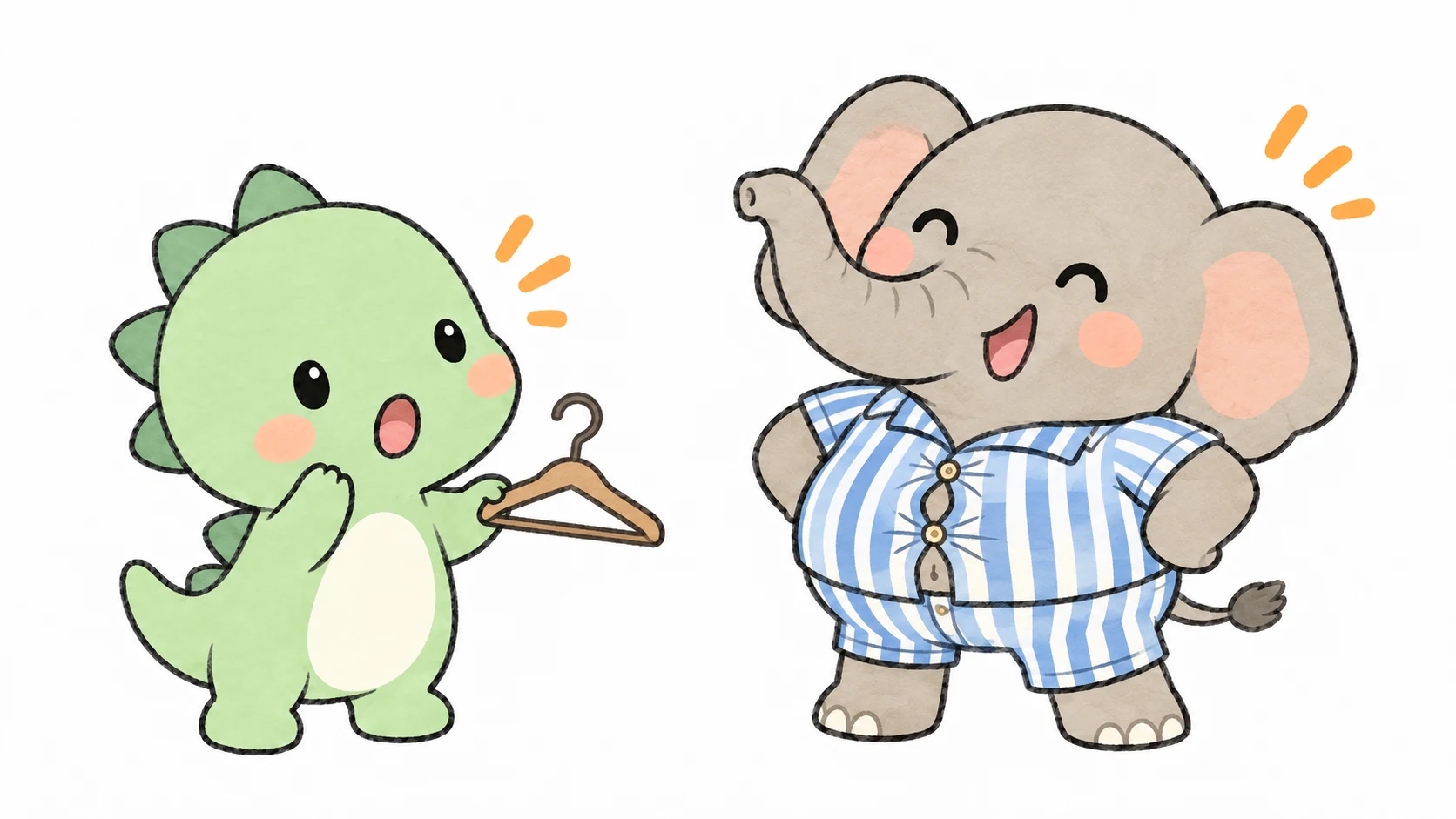
The most famous one: how did the elephant get into my pajamas?
No discussion of English ambiguity is complete without Groucho Marx. In the 1930 film Animal Crackers he plays an explorer, Captain Spaulding, recounting his hunting days in Africa:
One morning I shot an elephant in my pajamas.
"One morning, wearing my pajamas, I shot an elephant." Just as the audience starts to nod, he adds that how the elephant got into his pajamas, he'll never know.
The whole joke is whether in my pajamas hangs on shot (I was wearing pajamas when I shot) or on an elephant (an elephant wearing my pajamas). It is the same problem as our telescope, just with an elephant.
How do you keep only one meaning when you write English?
When you are reading, ambiguity is a fun puzzle; when you are writing, it is an email that gets misunderstood. A few easy fixes:
1. Use a more precise preposition. If the telescope is the instrument, through leaves no second reading:
He watched her through a telescope.
2. Turn with into a verb. With has several meanings of its own; swap in a verb and the relationship becomes explicit. To say she's holding the telescope:
He saw her holding a telescope.
To say the park has a telescope, just say what the park has:
He saw her in a park that has a telescope.
(In a park still doesn't say who is in the park here — but at least we know whose telescope it is. One problem at a time.)
3. Split it into two sentences. The cheapest fix, and the safest:
He was in the park. He saw her through a telescope.
Work English needs this trick most. Take Please send the report to the client with the invoice: does it mean "send the report to the client together with the invoice", or "send the report to the client who has the invoice"? Rewrite it as Please send the client the report and the invoice, and the problem disappears.
Do other languages do this too?
Some languages get a small head start here. Chinese, for example, habitually puts the place and the instrument before the verb:
他在公園用望遠鏡看到她。
Because 用望遠鏡 ("using a telescope") sits in front of 看 ("see"), it can only be the instrument; to say "she is holding a telescope", you would have to say something different, like 看到拿著望遠鏡的她 ("saw her, who was holding a telescope"). Chinese word order makes you decide before you speak. Even so, 在公園 ("in the park") still doesn't make clear whether she was in the park — same as English.
But Chinese has classic ambiguities of its own. The one grammar classes love most is:
咬死了獵人的狗
It can mean "(something) bit the hunter's dog to death", or "the dog that bit the hunter to death". Every language has places where sentence structure ties itself in a knot; they just tie the knot in different places.
As usual, the fine print
- "How many meanings" has no standard answer to begin with. Trees can be counted exactly, but how finely to count "meanings" — whether to split out who is in the park, whether to separate every use of with — has no agreed rule. The 5, 6 and 12 in this post are three different ways of counting, not a matter of who is right.
- 2, 5, 14 and 42 count the structures the grammar allows, not the meanings people would think of. Church and Patil's point was how many possibilities a computer must check; many of those structures make no sense in the real world (on Tuesday hanging on the park, for example), and humans never consider them.
- 93.2% comes from one particular experiment. It is the result of 3 experts on 300 Wall Street Journal examples, measured against a reference answer — not "the accuracy of humans reading English".
- Not every linguist agrees on every detail. How to subdivide phrases hanging on the verb, and how to analyse the "she is holding the telescope" reading, are handled differently by different theories. This post uses the most common framework, and the easiest to draw.
So, how many meanings?
A nine-word sentence, every word familiar, grammar flawless — and it yields five grammatical trees, more than a dozen pictures, and even the experts sometimes read it wrong. English is not one bit more precise than any other language; calling it a clear, logical language is further off still.
To a computer in 1982: five, and every extra prepositional phrase handed it a big pile more to check.
To the internet: six. The counting method is a bit off, but the number isn't too high — it's too low.
To a careful reader: a dozen or more, depending on how finely you slice the questions.
To you, actually standing in the park: one. If a man is watching you through a telescope, whatever the grammar says, you should go and walk somewhere else.
Handy 990's grammar practice has a "Prepositions" topic: 50 short passages where you pick the right little word — in, on, at — for each blank, one question per blank, never two phrases hanging at once for you to untangle. In the same series, 10 English sentences that look like gibberish but are perfectly grammatical collects more sentences that push grammar to its limits, and everyday words that change meaning at the office covers a different kind of ambiguity: not structure tied in a knot, but a single word that has several meanings of its own.